
Exploring why halal matters to Muslims and how greater understanding can help build a more inclusive society for people of different cultural and religious backgrounds.

What Does Halal Mean?
As cultural diversity and international travel continue to connect communities worldwide, understanding different religious and dietary practices has become increasingly important. Among these practices, halal is a fundamental aspect of Muslim life that is often misunderstood or viewed simply as a restriction on certain foods.
The word halal comes from Arabic and means “permissible” or “lawful” under Islamic teachings. Its opposite, haram, refers to actions or substances that are prohibited.
Although halal is commonly associated with food, its principles extend beyond dietary choices. In Islam, halal also relates to ethical conduct, business transactions, personal behavior, and other aspects of daily life.
For Muslims, choosing halal is not merely a lifestyle preference or a matter of personal taste. It is part of fulfilling religious obligations and living according to Islamic teachings.
Understanding this distinction is an important starting point for non-Muslims who wish to learn about halal culture and respect the needs of Muslim communities.
Why Is Halal Important for Muslims?
In Islam, consuming halal food is a religious obligation rooted in the Quran and the teachings of Prophet Muhammad.
The Quran emphasizes the importance of consuming what is both lawful (halal) and good (tayyib). Surah Al-Baqarah (2:168) instructs humanity to consume what is lawful and wholesome from the earth.
The concept of tayyib adds an important dimension to halal consumption. While halal addresses religious permissibility, tayyib emphasizes goodness and wholesomeness. Together, these principles encourage Muslims to consider not only what they consume but also whether it is appropriate according to their religious values.
Islamic dietary requirements include avoiding pork and its prohibited derivatives, intoxicating alcoholic beverages, and other substances considered haram. Meat consumption is also subject to specific religious requirements, including rules governing permissible animals and slaughter.
For practicing Muslims, following these requirements represents an expression of faith, discipline, and obedience to God.
These dietary practices should therefore be understood as religious commitments rather than simply cultural preferences.
Halal Is More Than Avoiding Pork and Alcohol
One common misconception is that food automatically becomes halal when it contains no pork or alcohol.
In reality, determining whether a processed product is halal may require examining its ingredients, their origins, manufacturing methods, and possible contact with prohibited substances.
For example, certain food additives, gelatin, enzymes, and emulsifiers may come from animal or other sources that require further verification.
Even when a product appears suitable based on its main ingredients, additional information may be necessary to establish its halal status.
This is particularly relevant in modern food manufacturing, where ingredients may pass through multiple suppliers and production facilities before reaching consumers.
Understanding these complexities helps explain why halal certification has become an important service for Muslim consumers and businesses.
The Role of Halal Certification in Building Consumer Confidence
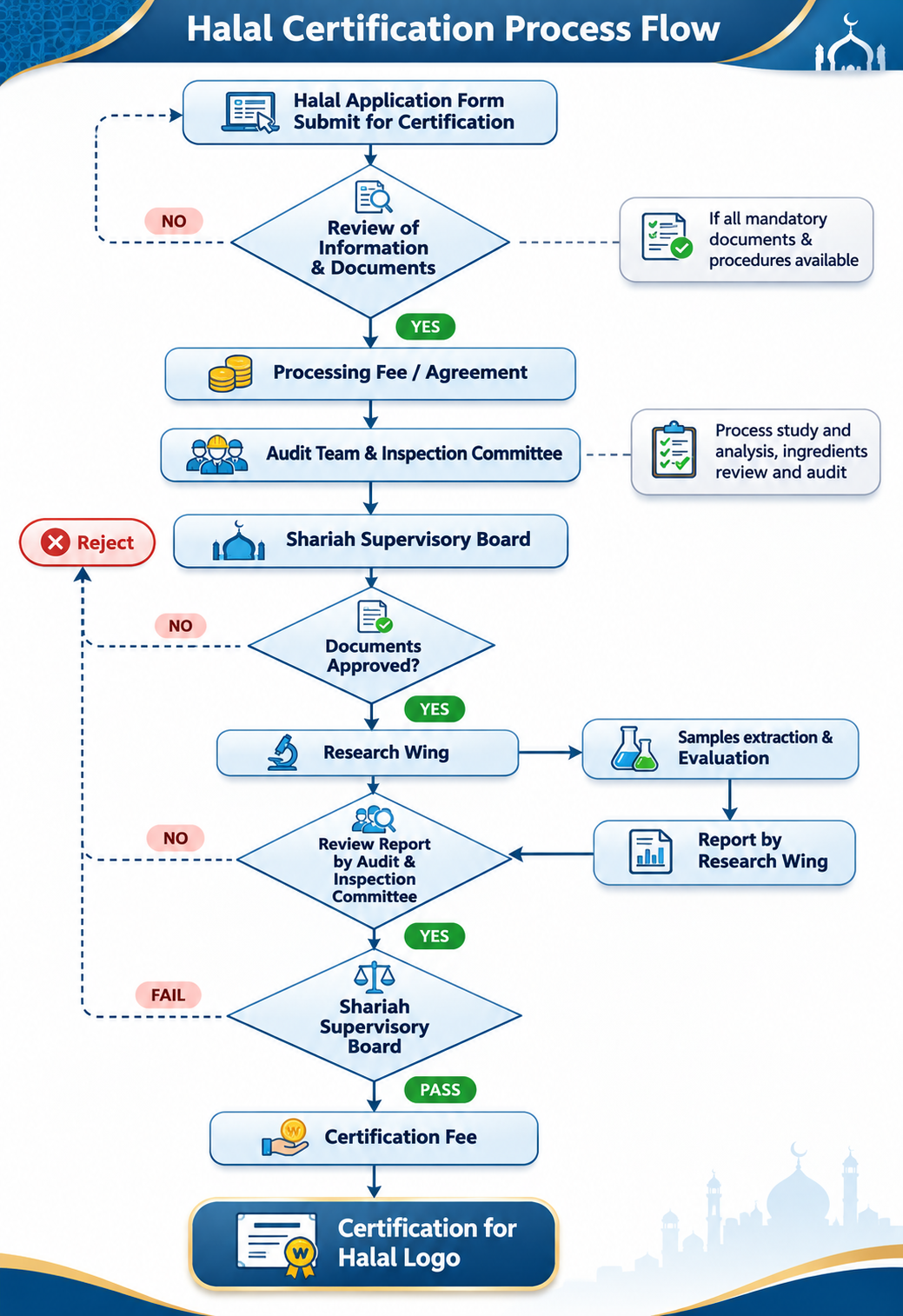
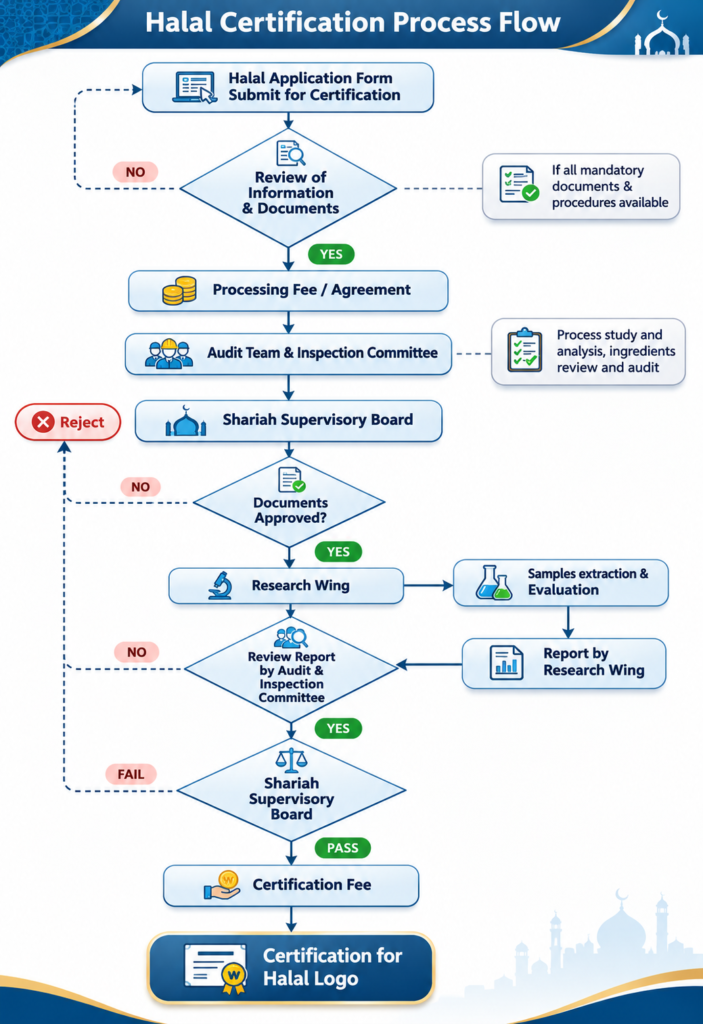
Halal certification provides a structured process for evaluating whether products and their production practices comply with applicable Islamic requirements.
According to the Halal Research Council, certification may involve reviewing product documentation, examining ingredient sources, assessing manufacturing processes, conducting inspections, and evaluating laboratory findings when necessary.
The certification process described by the organization begins with an application and document review, followed by technical assessment and Shariah supervision. Where required, samples are evaluated before the final certification decision is made.
This process helps consumers make informed purchasing decisions without having to investigate every ingredient and production procedure themselves.
For manufacturers, halal certification can also provide a means of demonstrating compliance with relevant standards and communicating product suitability to Muslim consumers.
However, halal certification should not be confused with a universal guarantee of superior nutritional value, food safety, or product quality. Those characteristics require their own appropriate assessments and regulatory controls.
Certification requirements and recognition also differ between countries and certification authorities. Businesses must therefore understand the standards applicable to their intended markets.
Why Should Non-Muslims Learn About Halal?
Understanding halal does not require someone to become Muslim or adopt Islamic religious practices.
For non-Muslims, learning about halal can be a practical way to develop cultural awareness, respect religious diversity, and communicate more effectively with Muslim colleagues, customers, friends, and visitors.
In everyday situations, even a basic understanding can make a meaningful difference.
For example, a restaurant employee who understands halal dietary requirements can provide clearer information about ingredients and food preparation. A hotel manager can better accommodate Muslim guests by identifying suitable dining options, while a food manufacturer can recognize the importance of ingredient transparency.
Such awareness is particularly valuable in multicultural environments where people with different beliefs interact regularly.
Rather than treating halal as something unfamiliar or exclusive, it can be approached as an opportunity to understand how religious values influence everyday decisions.
Importantly, respecting halal practices does not mean that non-Muslims must follow them. It means recognizing that dietary and religious requirements are significant to those who observe them.
How Can Korea Become More Muslim-Friendly?
As South Korea continues to attract international visitors, students, professionals, and business partners, awareness of Muslim dietary and cultural needs can help improve accessibility across tourism, hospitality, education, and commercial services.
For Korean businesses, developing Muslim-friendly environments can begin with practical measures such as providing accurate ingredient information, training employees on basic halal requirements, and clearly communicating whether products or services have been formally certified.
Restaurants that do not hold halal certification can still improve transparency by explaining their ingredients and preparation methods. However, they should avoid describing products as halal-certified without valid certification.
Educational programs can also play an important role in reducing misconceptions about Islamic culture.
Workshops, cultural exchange activities, halal industry exhibitions, and professional training programs can introduce non-Muslim audiences to Islamic dietary principles in an accessible and respectful manner.
These activities can encourage meaningful interaction between Muslim and non-Muslim communities while helping Korean businesses better understand the expectations of international Muslim consumers.
Halal as an Opportunity for Cultural Exchange and Business Development
Beyond its religious significance, halal has become an important consideration in international trade and consumer services.
For companies seeking to enter Muslim-majority markets, understanding halal requirements is often essential for regulatory compliance and market access.
In South Korea, this creates opportunities for businesses involved in food manufacturing, cosmetics, tourism, hospitality, halal certification consulting, professional education, and international trade.
Nevertheless, halal should not be presented solely as a commercial opportunity.
Its foundation remains religious, and the needs of Muslim consumers should be respected independently of their economic value.
A responsible approach to halal industry development therefore combines religious understanding, accurate information, transparent business practices, and cooperation with qualified certification organizations.
When these elements are considered together, halal-related initiatives can benefit both Muslim consumers seeking suitable products and non-Muslim businesses seeking to provide more inclusive services.
Building Understanding Through Education and Respect
Halal is an essential part of religious life for Muslims, but understanding its meaning can benefit society more broadly.
For Muslims, access to halal products and services supports the ability to practice their faith in everyday life. For non-Muslims, learning about halal offers an opportunity to understand different cultural traditions and participate in respectful interactions across communities.
In an increasingly interconnected world, religious and cultural awareness is becoming an important part of education, tourism, hospitality, and international business.
By promoting accurate knowledge, encouraging dialogue, and improving access to reliable information, communities and businesses can help create environments where Muslim consumers feel respected and non-Muslims feel more confident engaging with unfamiliar practices.
Ultimately, understanding halal is not about asking everyone to share the same beliefs. It is about recognizing differences, respecting religious commitments, and creating opportunities for people from diverse backgrounds to participate comfortably in society.
Reference
Halal Research Council. Halal Certification: Importance, Advantages, and Certification Process.
Quran: Surah Al-Baqarah 2:168; Surah Al-An’am 6:118–121; Surah Al-Mu’minun 23:51.